









































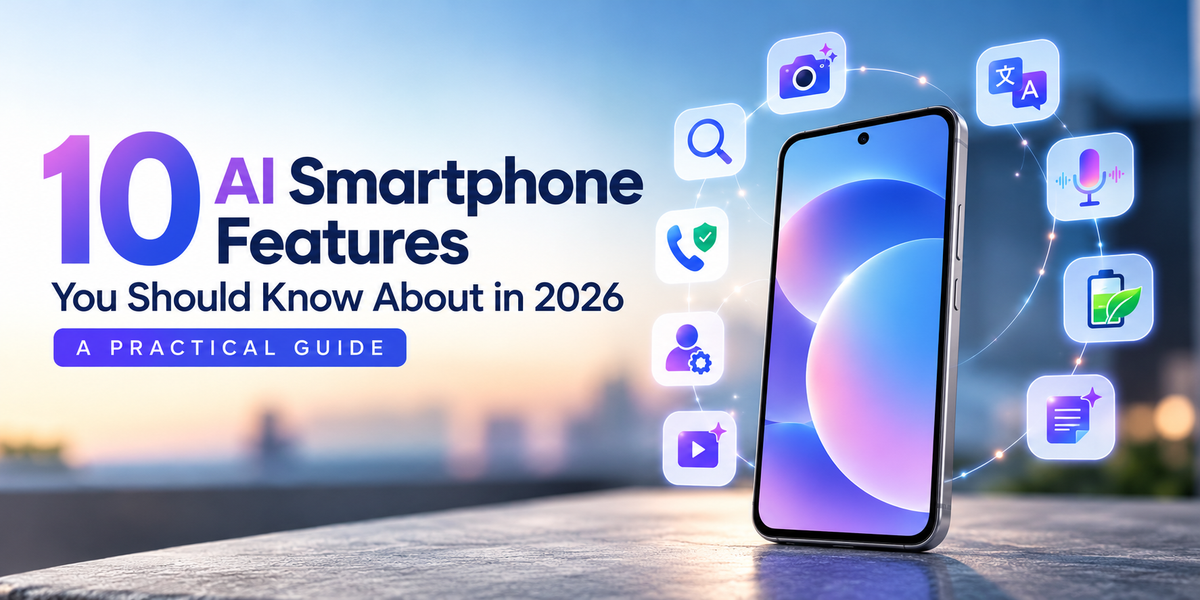
Artificial intelligence is transforming the way people use smartphones in 2026. From intelligent photography and real-time translation to personalised assistance and smarter battery management, AI smartphone features are becoming essential tools for everyday convenience.Modern smartphones are no longer limited to calling, messaging, and browsing. They can understand natural language, improve photographs, organise information, and automate everyday tasks. Leading manufacturers such as Samsung, Google, and Apple continue introducing AI-powered capabilities designed to improve productivity and user experience.However, not every AI feature is equally useful. Understanding which technologies provide genuine benefits can help buyers choose the right smartphone.This practical guide explores 10 important AI smartphone features in 2026, explaining how they work and why they matter.
1. AI-Powered Photography and Image Enhancement
AI photography is one of the most widely used smartphone innovations. Modern smartphones use computational photography and machine learning to improve image quality automatically.AI algorithms analyse lighting, colours, subjects, and surrounding environments before processing photographs. This helps improve exposure, reduce image noise, and enhance details.AI editing tools can also remove unwanted objects, adjust backgrounds, and improve portraits.For everyday users, these features make it easier to capture attractive photographs without professional photography knowledge. However, AI-generated edits may not always accurately represent the original scene.
2. Real-Time AI Language Translation
Language barriers are becoming easier to overcome with AI-powered translation features.Compatible smartphones can translate spoken conversations, written messages, and selected phone calls between supported languages.Some devices also provide live subtitles during conversations or video playback.These capabilities are particularly useful for international travellers, students, and professionals communicating with people from different countries.Translation accuracy varies depending on language, accent, background noise, and context. Users should verify important information rather than relying entirely on automated translations.
3. AI Voice Assistants and Natural Conversations
Traditional voice assistants primarily handled simple commands such as setting alarms or checking weather conditions.In 2026, advanced AI assistants can understand more conversational requests and help users complete complex tasks.Users can ask follow-up questions, request explanations, draft messages, or organise information using natural language.Some assistants can also interpret information displayed on the smartphone screen.This creates a more convenient hands-free experience, particularly when multitasking.However, supported capabilities differ between smartphone models, applications, and regions.
4. AI Battery Optimisation and Power Management
Battery life remains an important consideration when purchasing a smartphone.AI-powered battery management systems analyse usage patterns and adjust background activity to improve energy efficiency.For example, smartphones may limit unnecessary background processes, optimise application behaviour, or adapt power consumption based on regular usage habits.Some devices also use adaptive charging features designed to reduce battery stress.These technologies can help improve everyday battery efficiency, although actual results depend on hardware, software, network conditions, and usage.AI cannot prevent normal battery ageing, but intelligent power management can make smartphone ownership more convenient.
5. AI Writing Assistance and Smart Replies
AI writing tools are becoming increasingly useful for everyday smartphone communication.These features help users compose emails, correct grammar, rewrite messages, and adjust writing styles.For example, users can transform a casual message into a professional email or shorten lengthy text into a clear response.AI-powered keyboards may also suggest contextually relevant replies, reducing typing time.Students, professionals, and business owners can benefit from these capabilities when managing daily communication.However, users should review AI-generated text before sending it, particularly when discussing sensitive or important information.
6. AI-Powered Search and Visual Recognition
AI is changing how users search for information directly from their smartphones.Features such as Google's Circle to Search allow users to identify objects, products, landmarks, and text displayed on compatible devices.Instead of manually describing an object, users can select it on their screen and search for relevant information.For example, someone watching a video can identify a pair of headphones or find information about a landmark without leaving the current application.Visual recognition also helps with translating signs, identifying plants, and understanding unfamiliar objects.These features make smartphone searches faster and more intuitive.
7. AI Call Screening and Spam Protection
Unwanted calls and phone scams remain common concerns for smartphone users.AI-powered call screening features can help identify suspicious callers, filter unwanted calls, and provide information about unknown numbers.On supported smartphones, AI assistants may answer calls, ask callers why they are calling, and display their responses.This allows users to decide whether a conversation requires their attention.Some devices also provide call transcription and summaries, helping users review important conversations.However, AI screening cannot identify every scam, and users should remain cautious when sharing personal or financial information.
8. AI Note-Taking and Automatic Summaries
AI-powered note-taking is particularly useful for students and working professionals.Modern smartphones can convert voice recordings into written transcripts, summarise lengthy documents, and organise important information.For example, students can use supported tools to review lecture recordings, while professionals can generate summaries of meetings.Some AI features can also identify key discussion points and create structured notes.Samsung's Note Assist and Transcript Assist demonstrate how AI can simplify information management on compatible devices. These tools save time, although users should verify automatically generated summaries for accuracy.
9. AI Video Editing and Audio Enhancement
Creating videos directly from smartphones has become easier with AI-powered editing tools.Modern AI features can identify useful clips, reduce unwanted background noise, and improve audio clarity.Some smartphones also offer automatic video highlights, intelligent cropping, and editing recommendations.For example, users recording videos outdoors can use compatible audio enhancement tools to reduce distracting background sounds.Content creators can benefit from these capabilities when preparing short videos for social media.However, advanced editing features may require additional processing time or an internet connection.AI editing is convenient, but it does not completely replace professional video editing software.
10. Personalised AI Recommendations and Smart Automation
Personalisation is becoming an increasingly important part of smartphone technology.AI systems can analyse permitted usage patterns to provide relevant suggestions and simplify everyday activities.For example, smartphones may recommend applications, suggest reminders, organise notifications, or provide personalised daily briefings.Some devices can also automate selected routines based on time, location, or user preferences.These features help reduce repetitive tasks and create a more convenient smartphone experience.However, users should review privacy permissions and understand what information is collected or processed.
Are AI Smartphone Features Worth Using in 2026?
AI smartphone features offer practical benefits, particularly for photography, communication, productivity, and information searching.However, buyers should remember that AI capabilities vary significantly between devices.Some features operate directly on the smartphone, while others require cloud processing, an internet connection, or additional subscriptions.Language availability, regional restrictions, and software updates can also influence functionality.Before purchasing an AI smartphone, users should compare supported features rather than relying entirely on marketing claims.