







































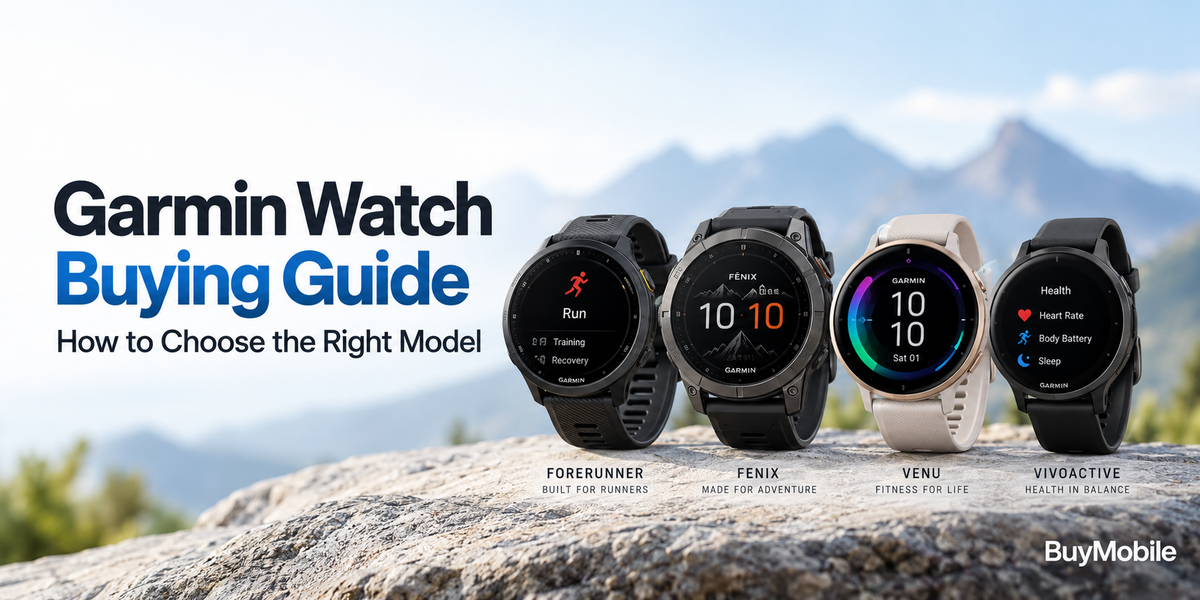
Choosing a Garmin watch can be surprisingly difficult. Garmin offers watches for runners, cyclists, hikers, gym users, outdoor adventurers and people who simply want better health tracking. Models can look similar while offering very different training, navigation and smartwatch features.The good news is that you do not need the most expensive Garmin to get a great experience. The right model depends on what you actually want to track, how seriously you train and which features you will use every week.This Garmin watch buying guide explains how to choose the right model without paying for capabilities you may never need.
What Should You Consider Before Buying a Garmin Watch?
Start with your primary activity.If running is your main focus, a Forerunner will usually make more sense than buying a heavy outdoor watch simply because it offers more features. If hiking, navigation and outdoor durability matter most, the Fenix family becomes more attractive.People wanting a balance between health tracking, fitness and everyday smartwatch functionality should consider Garmin's Venu or Vivoactive ranges.Battery life, display type, GPS capabilities, training metrics and navigation should also influence your decision.The best Garmin watch is not necessarily Garmin's most advanced watch. It is the one whose features match your routine.
Which Garmin Watch Is Best for Running?
The Garmin Forerunner family is the obvious starting point for runners.Forerunner watches are designed around running metrics, GPS tracking, structured workouts and recovery. They are generally lightweight, making them comfortable for long training sessions and overnight health monitoring.The Forerunner 165 is an appealing option for beginner and intermediate runners. It provides an AMOLED display, GPS, heart rate tracking, Daily Suggested Workouts and useful training information without pushing into the highest Garmin price categories.More advanced runners can move higher within the Forerunner range when they need deeper performance analysis, more sophisticated GPS functionality or additional training features.The key is matching the watch to your training level.A recreational 5K runner does not necessarily need the same watch as someone preparing for an ultramarathon.
Who Should Choose a Garmin Fenix?
Garmin Fenix watches target users who combine fitness with serious outdoor activities.They are particularly appealing for hiking, trail running, cycling and adventures where navigation, durability and extended battery endurance become important.The Fenix family generally feels more rugged than a lightweight running watch. That can be an advantage outdoors but may be unnecessary for someone whose training mainly involves neighbourhood runs and gym sessions.A Fenix makes the most sense when you will actually use its outdoor focused capabilities.If maps, navigation and long adventures are central to your lifestyle, paying more can be justified. If you mainly want step counting and occasional GPS runs, you may be buying far more watch than you need.
Is Garmin Venu Better for Everyday Users?
The Venu range takes a more lifestyle focused approach.It combines health and fitness tracking with an attractive smartwatch experience designed to work comfortably throughout the day.That makes Venu watches particularly interesting for people who exercise regularly but do not identify themselves primarily as runners or outdoor athletes.You might track gym workouts, walking, cycling, sleep and general health while also wanting notifications and useful everyday smart features.The Venu family therefore occupies an important middle ground.It provides Garmin's fitness expertise without making your watch feel completely centred around competitive training.
What About Garmin Vivoactive?
Vivoactive watches can be an excellent choice for users who want broad fitness tracking at a more approachable level.They are designed for people who exercise in several different ways rather than focusing exclusively on one sport.Running, walking, cycling, gym sessions and everyday health tracking can all fit naturally into the Vivoactive experience.The Vivoactive range is worth considering if you like Garmin's health ecosystem but do not need the deeper running tools of an advanced Forerunner or the rugged navigation capabilities of a Fenix.For many everyday fitness users, that balance can offer better value than moving immediately towards Garmin's premium models.
How Important Is GPS Accuracy?
GPS is one of the biggest reasons people choose Garmin.For runners and cyclists, reliable GPS helps measure distance, pace and routes. Hikers also depend on positioning for navigation and recording outdoor activities.However, not every buyer needs Garmin's most sophisticated GPS technology.If you regularly run through challenging environments such as dense cities, forests or mountain areas, advanced multi band satellite capabilities available on selected models can become valuable.Someone running around open suburban streets may see much less benefit.Again, paying more only makes sense when the additional technology solves a problem you genuinely have.
Which Garmin Health Features Matter Most?
Garmin watches can monitor much more than workouts.Depending on the model, features can include wrist based heart rate, sleep monitoring, stress tracking, HRV status and Body Battery.Body Battery is particularly useful because it combines several signals to provide an estimate of your available energy throughout the day.Sleep and HRV information can also help you understand recovery patterns, particularly when viewed over time rather than focusing on a single night's result.These features should be treated as wellness and training information rather than medical diagnosis.If health tracking is your priority, look beyond the number of sports modes and consider which everyday wellness tools the watch provides.
How Much Battery Life Do You Need?
Battery endurance is one of Garmin's biggest advantages over many conventional smartwatches.But battery requirements vary enormously.An everyday user may simply want several days between charges. A marathon runner needs enough GPS endurance for a long event. Someone hiking for several days may prioritise extended GPS operation above almost everything else.Premium outdoor Garmin watches often provide considerably longer endurance and specialised battery modes.Do not assume more battery is automatically necessary.If your watch spends most of its life near a charger, paying significantly more purely for extreme outdoor endurance may provide little practical value.
AMOLED or Traditional Garmin Display?
Garmin increasingly offers bright AMOLED displays across its range.AMOLED screens provide vibrant colours, strong contrast and an experience that feels closer to a premium smartwatch. They are excellent for everyday use and make health information visually appealingOther Garmin watches have traditionally used highly efficient displays that prioritise outdoor readability and battery endurance.Your preference depends on how you use the device.Someone wearing a watch in the office, gym and around town may prefer AMOLED. An outdoor athlete who prioritises battery endurance and visibility may value practicality over richer colours.Neither approach is automatically better.
Do You Need Maps and Navigation?
This feature can significantly affect how much you spend.Basic breadcrumb navigation and route tracking may be enough for runners who follow familiar roads.Full mapping becomes much more useful for hikers, trail runners and cyclists exploring unfamiliar environments.If you frequently rely on your phone for navigation during outdoor activities, choosing a Garmin with stronger mapping capabilities could be worthwhile.If you rarely leave familiar routes, advanced maps may become another premium feature you paid for but barely use.
How Much Should You Spend on a Garmin Watch?
Instead of beginning with a budget, begin with the features you need.A beginner runner may get excellent value from a Forerunner 165. An everyday fitness user could be better served by a Vivoactive or Venu. A serious runner may benefit from moving higher within the Forerunner range, while an outdoor adventurer can justify investing in a Fenix.Spending more usually adds specialised features, improved materials, navigation capabilities, training analysis or battery endurance.The important question is whether those additions improve your own experience.
Frequently Asked Questions
Which Garmin watch is best for beginners?
A model such as the Forerunner 165 can be an excellent starting point for runners, while Vivoactive models can suit users wanting broader everyday fitness tracking.
Which Garmin is best for serious runners?
The Forerunner family is designed specifically around running. More advanced models provide deeper training and performance features for experienced athletes.
Which Garmin watch is best for hiking?
The Fenix family is particularly well suited to outdoor users who prioritise durability, navigation and extended battery endurance.
Do I need the most expensive Garmin watch?
No. Premium models can provide advanced features that casual runners and everyday fitness users may rarely use. Choosing according to your activities usually delivers better value.