






































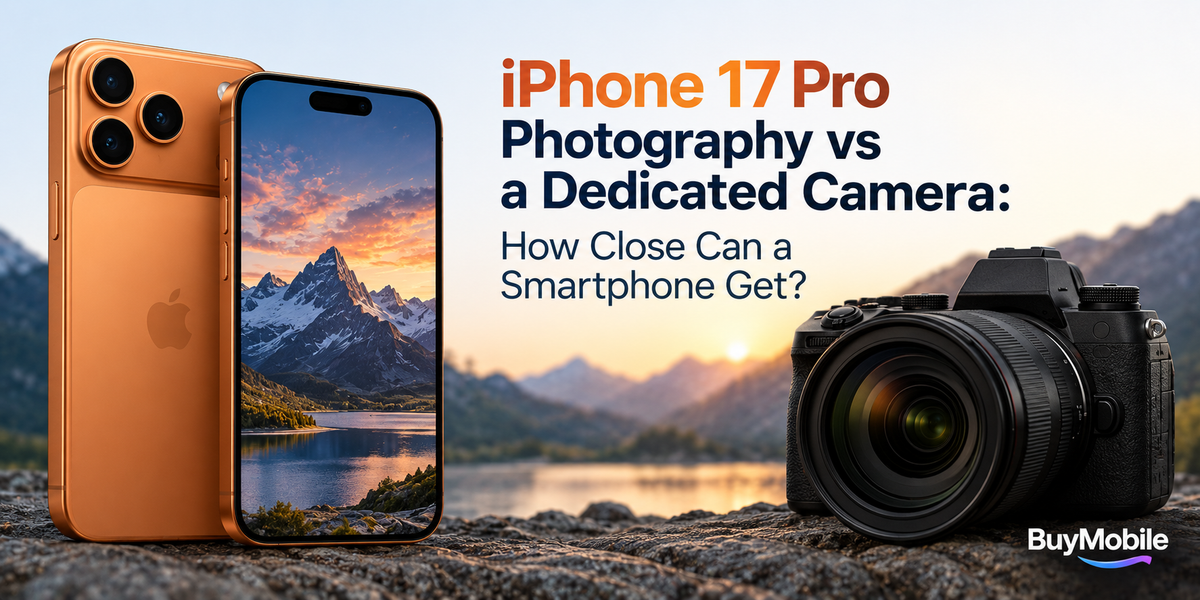
Smartphone photography has reached a point where carrying a dedicated camera is no longer essential for many people. The iPhone 17 Pro pushes that idea further with three 48MP Fusion rear cameras, advanced computational photography, ProRAW support and a telephoto system offering 4x optical and 8x optical quality options.But impressive specifications do not automatically make a smartphone a replacement for a mirrorless or DSLR camera. Dedicated cameras still have much larger sensors, interchangeable lenses and greater creative flexibility.So how close can the iPhone 17 Pro actually get?
How Good Is the iPhone 17 Pro Camera System?
The iPhone 17 Pro has one of Apple’s most versatile camera systems. It features a 48MP Fusion Main camera, 48MP Fusion Ultra Wide and 48MP Fusion Telephoto. The Main camera uses a 24mm equivalent focal length, while the dedicated Telephoto provides 4x at 100mm and an 8x optical quality option equivalent to 200mm.That range makes the phone surprisingly flexible.You can capture wide landscapes, everyday street photography, portraits, close ups, architecture and distant subjects without carrying several physical lenses.Apple also combines the hardware with computational systems such as the Photonic Engine, Deep Fusion and Smart HDR 5.This computational processing is one of the biggest reasons modern iPhone photography can look so impressive despite the physical limitations of a smartphone camera.
Can the iPhone 17 Pro Match a Dedicated Camera in Daylight?
Under good lighting conditions, the gap can become surprisingly small.Take a photograph outdoors during the day and the iPhone 17 Pro can produce excellent detail, colour and dynamic range. For social media, websites, travel albums and everyday photography, many users may struggle to find a meaningful reason to carry a larger camera.This is particularly true when images are primarily viewed on smartphone screens.A dedicated camera still has advantages when you begin examining files closely, making large prints or heavily editing photographs. Larger sensors can capture more information, while high quality lenses can deliver greater fine detail and more natural rendering.The iPhone compensates through processing. A dedicated camera relies more heavily on optics and sensor capability.Both approaches can create excellent photographs, but they reach the result differently.
What About Portrait Photography?
Portraits demonstrate both the strengths and limitations of smartphone photography.The iPhone 17 Pro can use computational photography and depth information to create background separation that resembles the shallow depth of field produced by a larger camera and fast portrait lens. Apple also allows compatible photos to be turned into portraits later using Focus and Depth Control.For casual portraits, family photos and social media, the results can be extremely convincing.A dedicated camera still produces optical background blur naturally. Hair, glasses and complicated edges can therefore appear more organic because the separation is created by the lens and sensor rather than primarily simulated through software.For professional portrait photographers, that difference remains important.For everyday users, the convenience of the iPhone may matter more.
Can the iPhone 17 Pro Compete in Low Light?
Low light is one of the toughest challenges for any smartphone camera.A dedicated camera normally starts with a major physical advantage because its larger sensor can collect more light. Pair that sensor with a bright lens and it becomes particularly powerful for night photography, events and indoor shooting.The iPhone takes a different approach.Night mode and computational photography can combine processing techniques to create bright, detailed images from difficult scenes. The results can look excellent without requiring the photographer to understand shutter speed, ISO or exposure settings.However, aggressive processing cannot completely replace a larger sensor.In extremely dark conditions, a dedicated camera can retain cleaner detail and provide photographers with more flexibility when editing RAW files.
Is 8x Zoom Enough to Challenge a Camera?
The iPhone 17 Pro significantly improves its versatility with its telephoto system.Apple's 48MP Fusion Telephoto uses a 100mm equivalent 4x configuration and can provide a 12MP 8x optical quality option at a 200mm equivalent focal length. Digital zoom extends as far as 40x.For travel, portraits, concerts and everyday distant subjects, this gives users much more freedom than older smartphones.But dedicated cameras remain far ahead when specialised telephoto photography is required.Wildlife and sports photographers can attach 300mm, 400mm, 600mm or even longer lenses to interchangeable lens cameras. These lenses provide genuine optical reach that a thin smartphone simply cannot physically reproduce.The iPhone is incredibly versatile for its size, but specialised lenses remain one of the biggest advantages of dedicated cameras.
Does ProRAW Make the iPhone a More Serious Photography Tool?
Absolutely.Apple ProRAW combines RAW information with iPhone image processing, giving photographers greater flexibility when adjusting exposure, colour and white balance during editing.That makes the iPhone much more useful for photographers who prefer editing their images rather than accepting the automatic result.However, dedicated cameras still provide extensive RAW workflows and generally benefit from their larger sensors. Professionals who regularly make major exposure adjustments, colour grade photographs or create large prints may still prefer dedicated camera files.ProRAW narrows the gap, but it does not remove the physical differences between the two systems.
Which Is Better for Travel Photography?
This is where the iPhone 17 Pro becomes extremely difficult to beat.A mirrorless camera, several lenses, batteries and accessories can quickly fill a camera bag. The iPhone fits into your pocket and is probably travelling with you anywayThat convenience changes photography.When something unexpected happens, the best camera is often the one you can access immediately.The iPhone also lets you capture, edit and share the photograph from the same device. For travellers creating Instagram posts, TikTok videos, blogs or family albums, that workflow is incredibly convenient.A dedicated camera makes more sense when photography itself is one of the main purposes of the trip.
Is the iPhone 17 Pro Better for Video?
Video is an area where the smartphone versus camera comparison becomes particularly interesting.The iPhone 17 Pro supports professional oriented features including ProRes RAW, Apple Log 2 and genlock. Apple's Final Cut Camera also supports ProRes RAW and open gate recording on the iPhone 17 Pro series, giving filmmakers significantly more flexibility during production and post processing.Dedicated cinema and mirrorless cameras still offer larger sensors, interchangeable lenses, extensive physical controls and specialised production features.But the fact that a phone can now fit into professional video workflows shows how far smartphone cameras have progressed.
Can the iPhone 17 Pro Replace a Dedicated Camera?
For many people, yes.If your photography mainly involves travel, family, pets, food, social media, everyday portraits and occasional creative projects, the iPhone 17 Pro can potentially handle almost everything you need.The difference becomes clearer when photography becomes specialised.Wildlife photographers need longer lenses. Professional portrait photographers may want larger sensors and fast prime lenses. Sports photographers require specialised autofocus, ergonomics and telephoto glass. Studio photographers may need lighting systems and extensive manual control.Dedicated cameras remain tools designed specifically for photography.The iPhone is a multipurpose device that happens to contain an extremely capable camera system.
Frequently Asked Questions
Is the iPhone 17 Pro good enough for professional photography?
It can be used professionally in certain situations, particularly for content creation, journalism, social media and mobile focused work. Traditional professional photography may still benefit significantly from dedicated camera equipment.
Can the iPhone 17 Pro shoot RAW photos?
Yes. The iPhone 17 Pro supports Apple ProRAW, which provides considerably more editing flexibility than standard processed images.
Is an iPhone better than a DSLR for beginners?
An iPhone is easier and more convenient. A DSLR or mirrorless camera offers greater control and teaches more about lenses, exposure and traditional photography techniques.